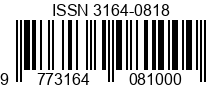
E-ISSN: 3164-0818
Additional Menu
Contact

Download


Tools



Published by

Information
Statistics

Ajari: Journal of Educational Science applies a rigorous double-blind peer review process to maintain the scientific quality, originality, relevance, objectivity, and integrity of every published article.
Under this review model, the identities of the authors are concealed from the reviewers, while the identities of the reviewers are concealed from the authors. Authors and reviewers must not attempt to identify, contact, or influence one another during the editorial process.
Every manuscript that passes the initial editorial screening is evaluated by at least two independent peer reviewers who have expertise relevant to the manuscript's subject, research methodology, and disciplinary context. Reviewer recommendations support the editorial decision but do not replace the independent judgment of the editor.
To protect the integrity of the double-blind review process, authors must submit an anonymized manuscript that does not disclose their identities. Author information must be provided separately through the journal's online submission system or in a separate title page when requested.
The double-blind peer review process is conducted according to the following principles:
Editorial decisions are based on scientific merit and are not influenced by commercial, political, personal, or institutional interests.
Manuscripts, review reports, author responses, editorial decisions, and related correspondence are treated as confidential documents.
Reviewers must evaluate manuscripts objectively and provide clear scientific arguments without making personal comments about the authors.
Editors and reviewers must report suspected plagiarism, duplicate publication, data fabrication, falsification, or other publication misconduct.
Every submitted manuscript proceeds through the following editorial stages:
The editorial office checks the completeness of the submission, manuscript structure, supporting files, declarations, reference style, and compliance with the author guidelines. The editorial office also ensures that the manuscript has been properly anonymized before it is forwarded to reviewers.
The editor-in-chief or assigned section editor conducts an initial assessment of the manuscript's relevance to the journal's aims and scope, originality, scholarly contribution, methodological quality, ethical compliance, academic presentation, and similarity screening results.
Manuscripts that fall outside the journal's scope, lack sufficient scientific contribution, contain serious methodological weaknesses, fail to meet ethical requirements, or contain unacceptable similarity may be rejected without external peer review.
Manuscripts that pass the initial screening are assigned to at least two independent reviewers. Reviewer selection is based on subject expertise, methodological competence, research experience, scholarly publication record, institutional diversity, availability, and the absence of conflicts of interest.
Reviewers independently evaluate the anonymized manuscript without receiving information about the authors' names, affiliations, email addresses, or academic identities. Authors do not receive information that identifies the reviewers.
Each reviewer submits a structured assessment, detailed comments, recommendations for improvement, confidential comments to the editor when necessary, and an editorial recommendation through the journal's online submission system.
The assigned editor evaluates the substance, clarity, relevance, and consistency of the review reports. Reviewer recommendations inform the editorial decision but do not automatically determine it. When the reviewers provide substantially different recommendations, the editor may appoint an additional independent reviewer.
Authors invited to revise their manuscripts must submit a revised anonymized manuscript together with a detailed point-by-point response explaining how each comment from the reviewers and editors has been addressed. Authors who do not adopt a recommendation must provide a clear scientific justification.
Revised manuscripts may be returned to the original reviewers through the same double-blind process. Manuscripts requiring major changes may undergo more than one review round. Minor revisions may be evaluated directly by the assigned editor when further external assessment is not required.
The editor-in-chief makes the final decision after considering the manuscript's scientific quality, reviewer reports, author responses, revisions, ethical compliance, originality, and relevance to the journal. Accepted manuscripts proceed to copyediting, layout editing, author proofreading, and publication.
Peer reviewers evaluate manuscripts using substantive academic criteria.
Reviewers assess whether each manuscript makes a clear scholarly contribution to one or more of the journal's focus areas:
Following editorial and double-blind peer review evaluation, the manuscript may receive one of the following decisions:
The manuscript meets the journal's scientific and editorial requirements and may proceed to production.
The manuscript requires limited clarification, correction, or improvement before acceptance can be considered.
The manuscript requires substantial improvement and may undergo another round of double-blind external review.
The manuscript does not meet the journal's scientific, methodological, ethical, or editorial standards.
The journal applies the following target periods to support a timely and responsible editorial process:
| Editorial Activity | Target Period |
|---|---|
| Administrative and initial editorial screening | Approximately 5–10 working days |
| Double-blind external peer review | Approximately 2–4 weeks |
| Minor revision | Approximately 7–14 days |
| Major revision | Approximately 14–30 days |
| Target for the first editorial decision | Approximately 4–8 weeks |
The actual processing time may vary depending on reviewer availability, manuscript complexity, the quality of revisions, and the number of review rounds required.
Editors and reviewers must protect the confidentiality and anonymity of all submitted materials. They must not disclose, distribute, reproduce, cite, or use unpublished information obtained through the review process for personal or professional purposes.
Reviewers must immediately disclose any actual or potential conflict of interest and decline the review when their independence may be compromised. Editors must replace reviewers whose relationships with the authors, institutions, or subject matter may affect impartiality.
The journal follows the COPE Ethical Guidelines for Peer Reviewers in maintaining reviewer confidentiality, objectivity, independence, and professional conduct.
Reviewer assignments, review reports, editorial decisions, anonymized manuscripts, revised manuscripts, author response letters, and relevant correspondence are documented through the journal's online submission system. These records support editorial accountability, quality assurance, internal evaluation, and verification of the journal's double-blind peer review practices.
All manuscripts submitted to Ajari: Journal of Educational Science undergo a double-blind peer review process and are evaluated according to scientific merit, originality, relevance, methodological rigor, ethical compliance, and contribution to educational scholarship. Submission does not guarantee acceptance or publication.